AI Max Comes to Standard Shopping: The Feed Attributes That Decide Your Results

On July 24, Google began rolling AI Max into Standard Shopping campaigns — the one-click upgrade is now appearing in accounts, with matching support in Google Ads Editor 2.13, released the same day. If you run Shopping campaigns for a Shopify store, you’re about to face a simple-looking toggle with non-simple consequences.
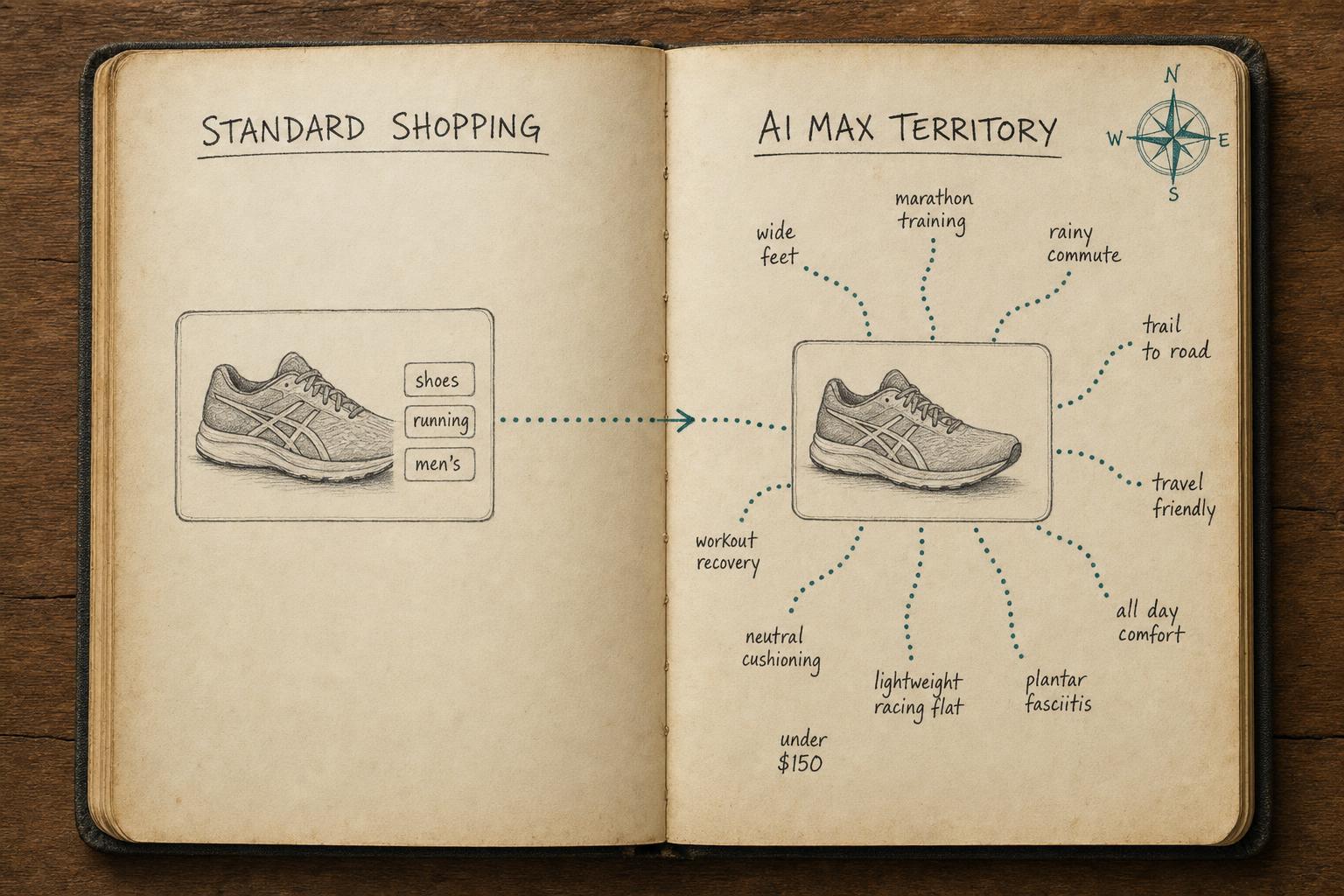
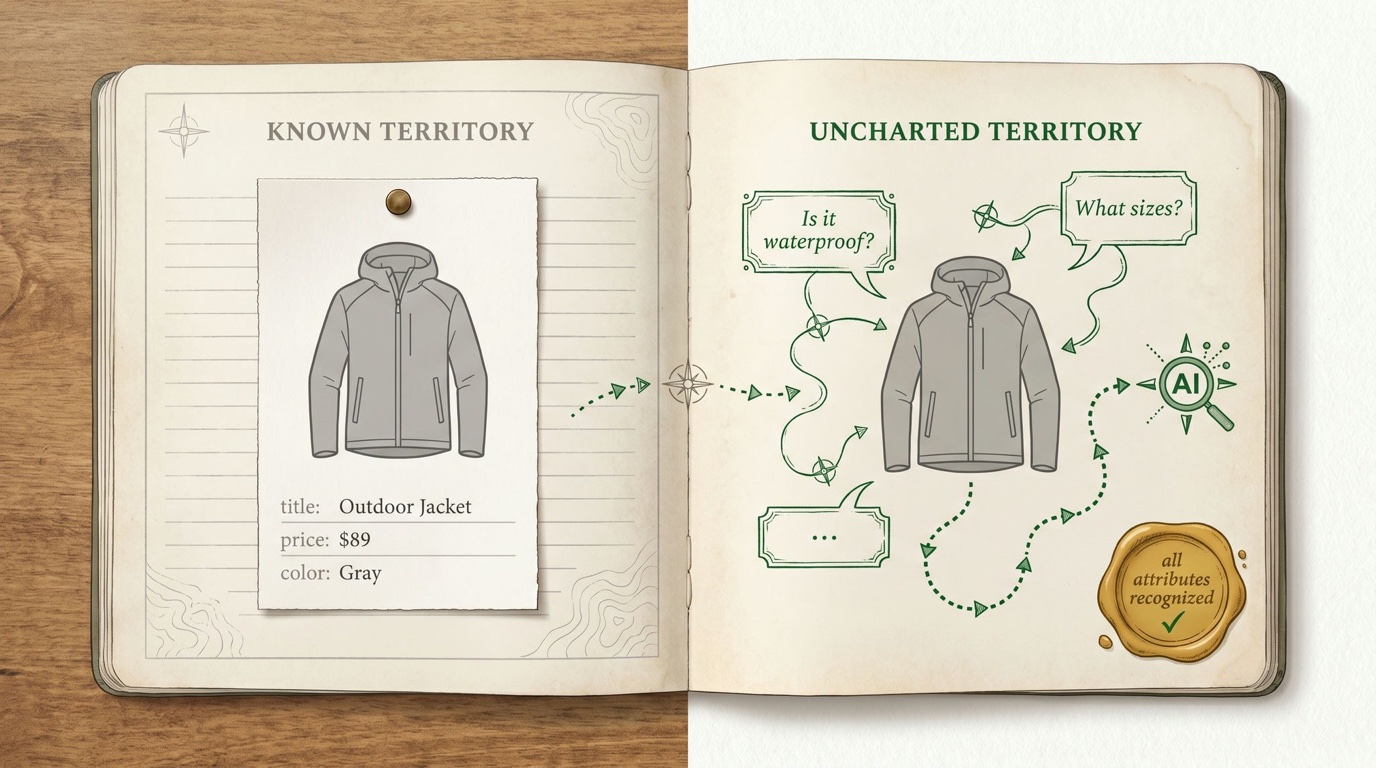
Here’s the sentence that should reframe how you think about it, from Google’s own documentation: with AI Max, “Google AI treats your GMC feed as a deep product database rather than a static list.” Your feed stops being a formality that gets products approved and becomes the raw material an AI reads, extracts from, and writes ads with. Which means the merchants who win with AI Max won’t be the ones with the cleverest settings — they’ll be the ones with the richest, most accurate product data.
This guide covers what AI Max for Standard Shopping actually does (verified against Google’s docs), which feed attributes it reads, and what to fix before you enable it.
What AI Max for Shopping actually does
Three capabilities, per Google’s announcement:
- Text customization — generates ad copy for your Shopping ads “so that they speak directly to shopper intent and conversational queries.” This includes something worth reading twice: Google AI “can dynamically update your product titles to align with customer search queries” — rewritten titles serve only “if they’re predicted to perform better than the original titles.”
- Final URL expansion — crawls your website to identify “high-value commercial URLs” (category pages, new arrivals, editorial pages) and can send shoppers there instead of the product page. It requires text customization to be on, and it can be disabled independently.
- Optimal format selection — automatically chooses between text and Shopping ad formats per query.
Worth knowing before you toggle: this is a beta for Shopping (Google’s help pages still label it so), Google’s headline number is a claimed ~5% average uplift in conversions/conversion value (their internal data — treat accordingly), your existing product targeting and bidding carry over, and this does not require migrating to Performance Max — which is precisely the point. It brings PMax-style AI generation to merchants who kept Standard Shopping for its control.
The mechanic that matters: your feed is now the copywriter’s source material
Google names the attributes it reads with unusual specificity: the announcement cites “details like fabric softness, material durability and fit”; the help docs describe extracting “key product attributes (such as ‘waterproof,’ ‘stability-focused,’ or ‘available for store pickup’)” and serving text ads with AI-generated headlines “and even product imagery from the feed.” Agency analyses (Common Thread Collective’s is the best) add structured attributes — material, color, size, fit, age group, and custom label fields — plus descriptions and category.
The blunt version comes from smec’s strategy piece: you cannot fake data density. If your feed is thin, the AI-generated copy built from it will be thin — no bid strategy fixes that.
For Shopify merchants there’s a structural catch: Shopify’s native product fields don’t populate most of those attributes by themselves. Material, fit, and use-case details usually live in your description prose (where extraction is unreliable), in metafields (which your feed tool must actually map), or nowhere. That gap is invisible in normal Shopping — and becomes your ceiling in AI Max.
The pre-flight checklist: fix these before enabling
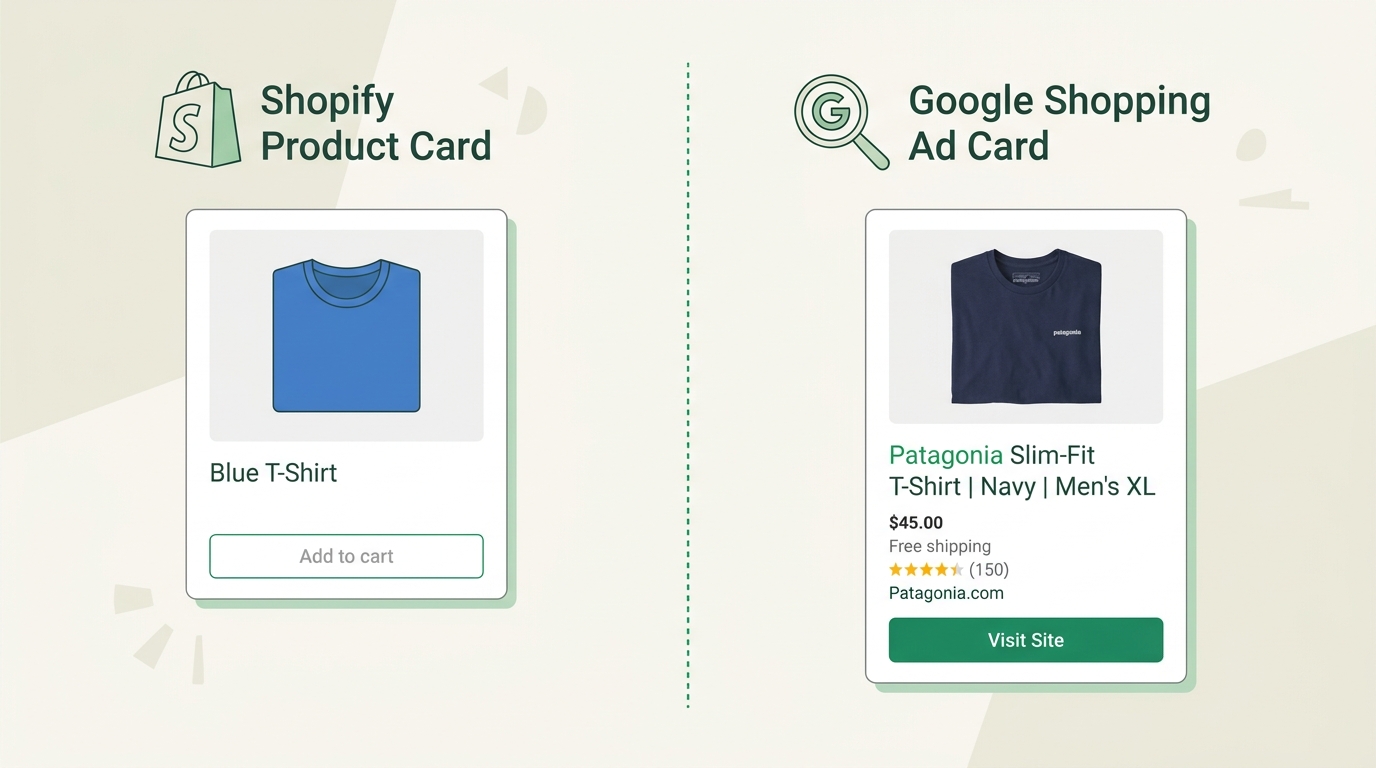
- Titles. AI Max may rewrite weak titles, but its rewrites are built from your data — give it accurate raw material and structure (our title optimization guide covers the formula). Post-enable, the product titles report shows every rewrite Google serves: read it as a free audit — each rewrite is Google telling you what your title was missing.
- Descriptions. Attribute-dense beats keyword-stuffed, specifically now: name materials, dimensions, fit, use cases in extractable plain language. This is the same direction Google’s conversational attributes push — our field report pairs directly with this.
- Structured attributes. Fill
material,color,size,age_group, and (per agency analysis) keepcustom_labelfields meaningful. If the data lives in Shopify metafields, confirm your feed tool maps them into the feed rather than dropping them. - Images. Feed imagery can now appear in AI-generated text-format ads — another reason the Jan 2027 image requirements are worth beating early.
- Landing-page inventory (for the FUE decision): if your collection pages are thin or auto-generated, follow the practitioner consensus — enable text customization first, keep Final URL expansion off until your category pages deserve traffic (Common Thread and smec both land here).
Audit your feed’s attribute coverage before flipping the toggle — Simple Product Feeds installs free and shows you exactly what Google sees per product, field by field.
Enabling it sanely
- One campaign first, not the account. Standard Shopping keeps its structure, so a controlled test is easy.
- Text customization on, FUE off as the starting configuration for most Shopify stores.
- Wait at least two weeks before judging — Google’s own reporting guidance — and evaluate at the account level, since AI Max claims credit for “incremental mid-funnel queries” that don’t show up neatly per-campaign.
- Watch two reports weekly: the product titles report (what’s being rewritten and why) and the search terms report (which conversational queries you’re newly matching — this is the demand AI Max was built to catch).
- Skeptics exist for good reason: smec’s Manuel Baudisch reads the whole release as Google conceding that many advertisers won’t move to PMax. Fine — take the concession and keep the control.
The bigger arc
This is the third time in two weeks Google has told the same story from a different angle: the August 17 bidding change makes your targets binding, AI Max makes your attributes generative, and both raise the price of sloppy product data while raising the return on rich data. The feed is quietly becoming the highest-leverage surface in the account. If you haven’t audited yours in a while, the original AI Max readiness checklist is the place to start — and everything in it just got more literal.
Ready to simplify your product feeds?
Simple Product Feeds connects your Shopify store to Google Shopping, Meta, and more — in minutes.
Install Simple Product FeedsFrequently Asked Questions
- Is AI Max available for Standard Shopping campaigns now?
- Yes — Google began rolling AI Max into Standard Shopping accounts on July 24, 2026, as a one-click upgrade, with matching support in Google Ads Editor 2.13. It is still labeled a beta in Google’s help documentation.
- Will AI Max rewrite my product titles?
- It can. Google states its AI may dynamically update product titles to align with search queries, serving a rewrite only when it predicts the rewrite will outperform your original. The product titles report shows every rewrite — read it as free feedback on what your titles were missing.
- Do I have to migrate to Performance Max to use AI Max?
- No — that is the point of this release. AI Max brings AI-generated ad copy and query matching to Standard Shopping while keeping your existing campaign structure, product targeting, and bidding.
- Should I enable Final URL expansion?
- Most practitioners advise starting with text customization on and Final URL expansion off, especially if your collection or category pages are thin. FUE crawls your site and can send shoppers to category or editorial pages instead of product pages — enable it once those pages deserve the traffic.
- Does feed quality actually change AI Max results?
- Directly. Google describes AI Max as treating your Merchant Center feed as a deep product database, extracting attributes like material, fit, and use cases to generate ad copy. Thin or inaccurate feed data produces thin generated ads — no bidding setting compensates for it.
Related Articles
Is Your Shopify Feed Ready for AI Max for Shopping?
Is your Shopify feed ready for AI Max for Shopping? Run this pre-launch checklist before you enable it — or risk wasting budget on weak signals.
Google's Conversational Attributes: A Field Report from One of the First Real Uploads
Google just added six new AI-shopping fields to Merchant Center — and no feed tool can generate them with rules. We built them with an LLM, uploaded them, and documented everything: the format, the gotchas, the costs, and the open questions.

Google's August 17 Bidding Change: What Shopify Shopping Advertisers Need to Do
Google's Aug 17, 2026 Smart Bidding change makes your tCPA/tROAS targets binding on budget-limited Shopping and PMax campaigns. What changes, who's affected, the pre-deadline checklist — and the feed-side levers nobody covers.
How to Optimize Google Shopping Product Titles (Shopify Guide)
How to write Google Shopping product titles that win impression share. The Brand + Product Type + Key Attribute formula with Shopify field mapping, SPF title rules, and a live title builder.