No, Google's Product Taxonomy Isn't Being "Deprecated on July 31" — Here's What's Actually Changing
No, Google’s Product Taxonomy Isn’t Being “Deprecated on July 31” — Here’s What’s Actually Changing
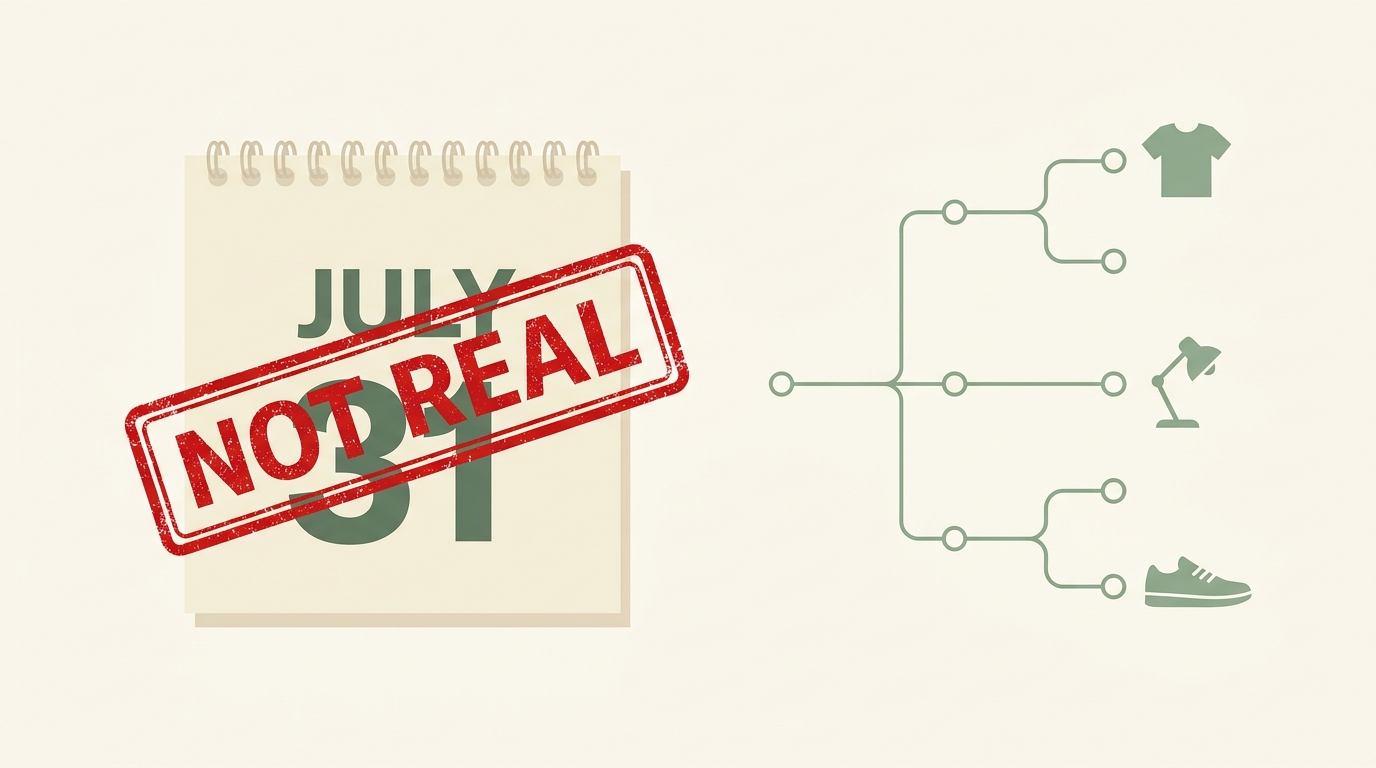
If you’ve seen warnings that Google’s product taxonomy is being deprecated on July 31, 2026 — and that you need to urgently restructure your Shopify feed’s google_product_category values before then — take a breath. We checked every primary source Google publishes. The deadline does not exist.
This article covers what we verified (with receipts you can check yourself), where the myth appears to have come from, the feed deadlines that are real in 2026, and what Shopify merchants should actually do about product categories.
What the primary sources say
A claim this specific — a named attribute, a hard date — should be trivial to confirm. It isn’t, because Google has never announced it. As of publication:
- The taxonomy file itself: Google publishes its product taxonomy as a plain text file. The version header still reads
Google_Product_Taxonomy_Version: 2021-09-21. There is no 2026 revision, no successor file, and no sunset notice. - The
google_product_categoryhelp page contains no deprecation language at all. The attribute is documented as optional, exactly as it has been for years. - The Merchant Center announcements log — where Google posts every policy and spec change — has no taxonomy deprecation entry.
- The 2026 product data specification update — the canonical list of what’s changing this year — doesn’t mention the taxonomy being retired, restructured, or given a deadline of any kind.
Four primary sources, zero mentions. The claim is fabricated.
Where the myth came from
Tracing the “July 31 deadline” back through search results leads to a cluster of AI-generated SEO content — articles that cite each other, describe a “January 2026 taxonomy restructuring” that also never happened, and link to no Google source anywhere. This is a growing pattern in ecommerce content: invented urgency ranks well, because merchants search for deadlines and almost nobody checks the primary source.
A quick way to evaluate any “Google deadline” claim before you act on it:
- Check the Merchant Center announcements log — real changes are posted there, with dates.
- Check the product data specification update — annual spec changes live here.
- Check the attribute’s own help page — deprecations are always flagged on the affected attribute’s documentation.
If a claimed deadline appears in none of those three places, it isn’t real — no matter how many articles repeat it.
The 2026 deadlines that ARE real
Ironically, while content farms invented a fake deadline, several real ones are approaching that deserve your attention:
- August 17, 2026 — Smart Bidding target enforcement. For budget-limited campaigns (including Shopping and Performance Max), Google’s Smart Bidding will start optimizing to your literal stated target (tCPA/tROAS) instead of beating it. If your targets were set loosely because Google historically over-delivered, review them before this date.
- August 18, 2026 — Content API for Shopping shuts down. This one is for the tools you use, not for you directly: any app still submitting products through the legacy Content API stops working. Simple Product Feeds customers are unaffected — but if you use other feed tooling, it’s a fair question to ask your vendor this month.
- January 31, 2027 — minimum image size enforcement. Product images below 500×500 pixels (both
image_linkandadditional_image_link) will stop being accepted. Google has shown warnings since April 2026. Shopify stores with older catalog photography should audit now — image reprocessing takes longer than a weekend when you have thousands of SKUs.
So what should you actually do about google_product_category?
Here’s the evergreen truth about the attribute the fake deadline was built around:
You usually don’t need to set it at all. Google automatically assigns every product a category from its taxonomy, based on your title, description, price, brand, and GTIN. The attribute exists as an override for specific situations: category-dependent policy requirements (like alcohol), campaign structures built on category filters, or cases where Google’s automatic assignment is genuinely wrong.
For Shopify merchants there’s a better modern answer: Shopify’s Standard Product Taxonomy. Shopify now maintains its own structured product taxonomy, and when your products carry those categories, they can be mapped to Google’s taxonomy automatically — no manual category spreadsheets, no taxonomy babysitting. Simple Product Feeds does this mapping out of the box: if your Shopify products have categories assigned, your feed’s google_product_category fills itself, correctly, and stays correct as your catalog changes.
If your products are being miscategorized (which affects which searches you appear on and what you pay per click), that’s a real problem worth fixing — but it’s a data-quality problem, not a deadline problem. Start with accurate titles and Shopify categories, and let the mapping do the rest.
Want your feed’s categories handled automatically? Simple Product Feeds is free to install and maps Shopify’s taxonomy to Google’s for every product in your catalog.
The bottom line
- The “July 31, 2026 taxonomy deprecation” is not real — no primary Google source mentions it.
google_product_categoryremains optional, auto-assigned, and override-able — same as it’s been for years.- The deadlines worth your calendar space: Aug 17 (bidding targets), Aug 18 (Content API, vendor-side), Jan 31, 2027 (500×500 images).
- Before acting on any claimed Google deadline: announcements log → product data spec → the attribute’s help page. Three checks, two minutes, zero panic.
Ready to simplify your product feeds?
Simple Product Feeds connects your Shopify store to Google Shopping, Meta, and more — in minutes.
Install Simple Product FeedsFrequently Asked Questions
- Is Google's product taxonomy being deprecated in 2026?
- No. Google's taxonomy file is still versioned 2021-09-21, and no primary Google source — the announcements log, the 2026 product data specification, or the google_product_category help page — mentions any deprecation or deadline. The 'July 31, 2026' claim traces to AI-generated content with no Google citation.
- Is google_product_category required in my Shopify feed?
- No — it's optional. Google automatically assigns every product a category based on your title, description, price, brand, and GTIN. You only set the attribute to override the automatic assignment, e.g. for category-specific policies or campaign structures.
- Which Google Shopping deadlines are actually real in 2026?
- Three worth knowing: August 17, 2026 (Smart Bidding optimizes to your literal target on budget-limited campaigns, including Shopping and PMax), August 18, 2026 (the legacy Content API for Shopping shuts down — affects feed tools, not merchants directly), and January 31, 2027 (product images below 500×500 pixels stop being accepted).
- Do I need to change my Shopify feed before July 31, 2026?
- Not because of any taxonomy deadline — that claim is fabricated. If your products are miscategorized, fix it as a data-quality improvement: assign Shopify Standard Product Taxonomy categories and let your feed tool map them to Google's taxonomy automatically.
Related Articles
Google Merchant Center Disapproved Products: The Complete Fix Guide (Updated 2026)
Product disapproved in Google Merchant Center? Diagnose the exact cause and fix it fast — every disapproval type, the fields to check, and how to stop repeats. Updated for 2026 policies. Merchant Center. Step-by-step fixes for GTINs, price mismatches, image violations, missing attributes, and more.
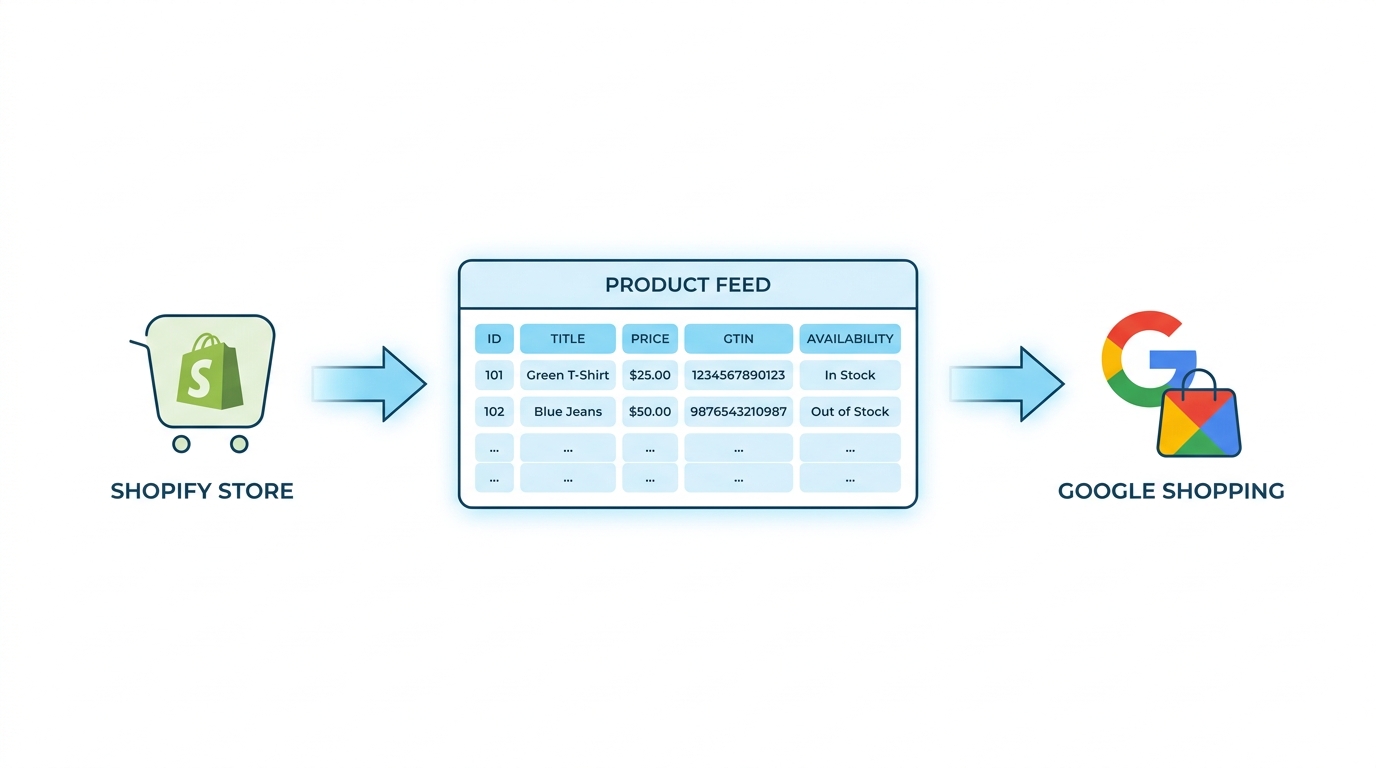
Google Shopping Product Feed for Shopify: Setup, Optimization, and Maintenance
Complete Shopify guide to Google Shopping product feed setup: field mapping, title optimization, GTIN validation, variant handling, and ongoing maintenance.

The Google Ads TOS Change Most Shopify Merchants Do Not Know About (And Why Your Feed Is the Safeguard)
Google's July 1 TOS update holds advertisers accountable for AI-generated assets. Here's what google ads automation responsibility means for Shopify merchants.